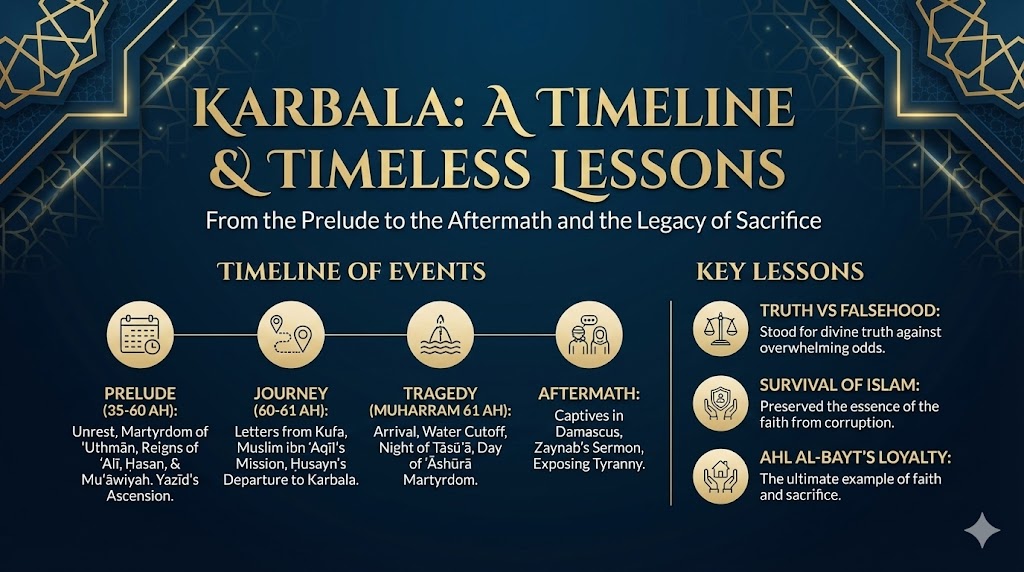
Prelude to Karbala (35–60 AH)
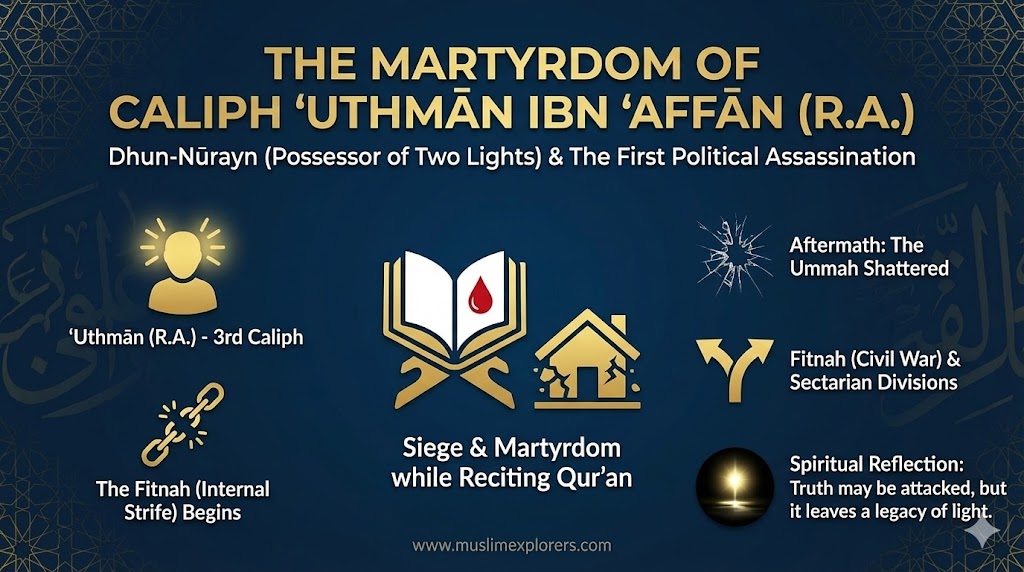
- 35 AH — Martyrdom of Caliph ʿUthmān (R.A.)
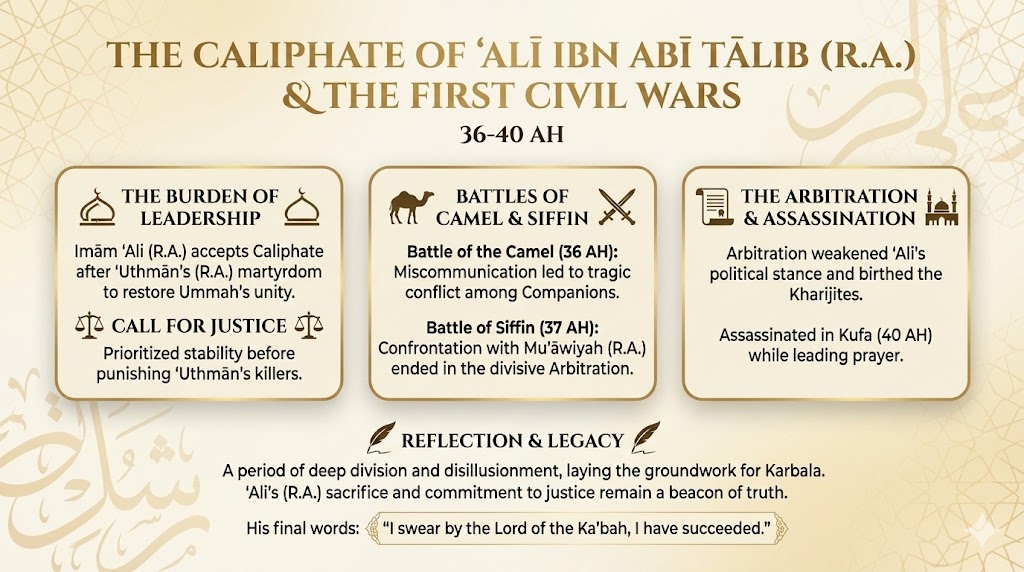
- 36–40 AH — Caliphate of ʿAlī (R.A.), Jamal and Ṣiffīn
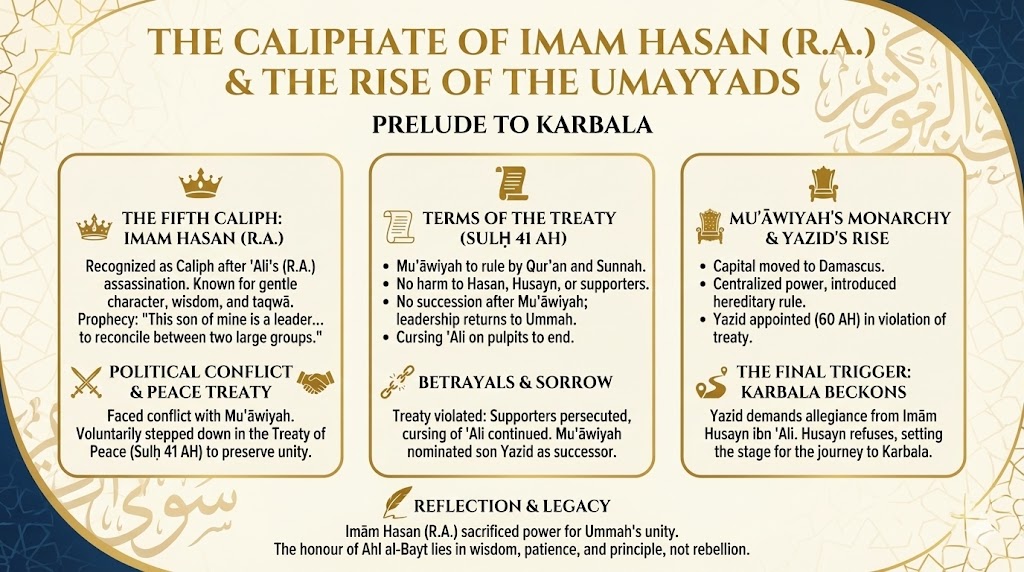
- 41 AH — Imām Ḥasan (R.A.) signs peace treaty
- 60 AH — Death of Muʿāwiyah; Yazīd seizes power
The Journey to Karbala
- Ḥusayn (A.S.) refuses bayʿah to Yazīd
- Migration from Madinah to Makkah
- Letters from Kūfah and mission of Muslim ibn ʿAqīl
- Betrayal in Kūfah; Muslim martyred
Day-by-Day Tragedy (2–10 Muharram 61 AH)
- 2nd Muharram — Arrival at Karbala
- 7th Muharram — Water cut off
- 9th Muharram — Night of Tāsūʿā, worship and repentance
- 10th Muharram — ʿĀshūrā: martyrdom of Ḥusayn (A.S.)
Aftermath (11–12 Muharram & Safar 61 AH)
- Women and children taken captive
- Powerful sermons of Lady Zaynab (A.S.) in Kūfah and Shām
- Exposure of Yazīd’s illegitimacy
Why Karbala Preserved Islam
- It separated true Islam from political Islam
- It proved leadership is about character, not crowns
- It taught that silence before tyranny is betrayal
Eternal Lessons for the Ummah
- Truth is heavier than numbers
- Dignity is greater than survival
- Sacrifice revives dead hearts
- Every age has its Yazīd—and its Ḥusayn
“Every day is ʿĀshūrā. Every land is Karbala.”