1) The Burden of Leadership
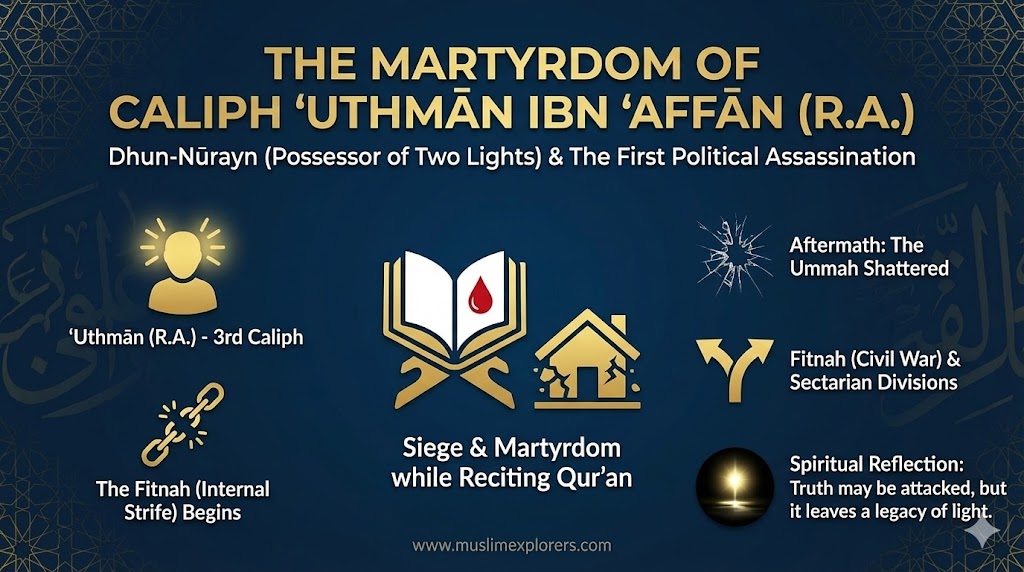
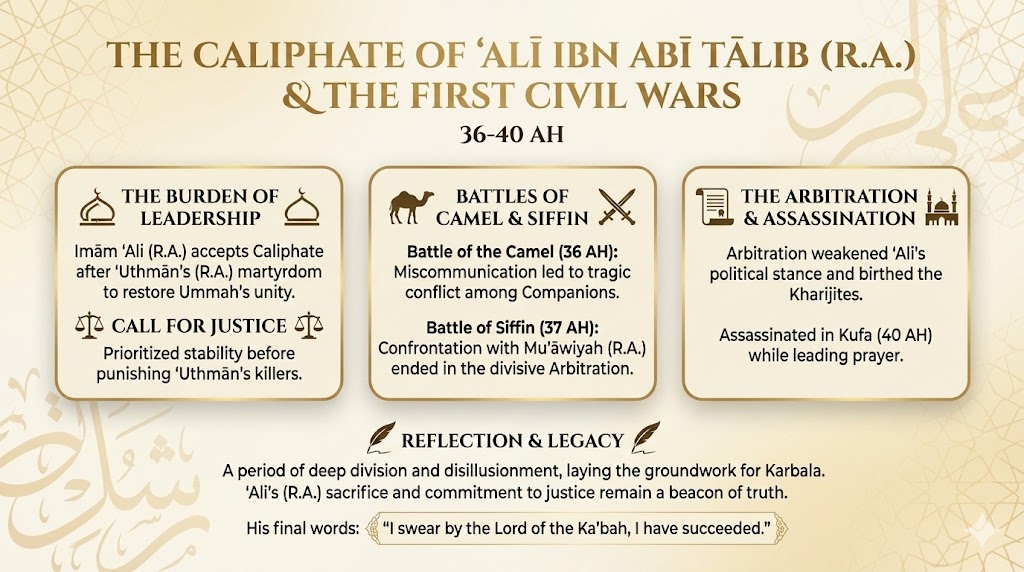
After the martyrdom of ʿUthmān (R.A.), the Ummah was shaken. The people of Madinah turned to Imām ʿAlī ibn Abī Ṭālib (R.A.) to restore justice. Though reluctant, he accepted the Caliphate to preserve unity and guide the Ummah—yet the chaos made leadership extremely difficult.
2) The Immediate Demand: “Who Killed ʿUthmān?”
One of the earliest crises was the demand for swift punishment of ʿUthmān’s killers. ʿAlī (R.A.) emphasized restoring stability first because the rebels still held influence and were mixed among the people.
3) The Battle of the Camel (Jamal) – 36 AH
- Key figures including ʿĀʾishah (R.A.), Ṭalḥah (R.A.), and Zubayr (R.A.) demanded quicker justice.
- Forces gathered near Basrah; attempts at peace were undermined by miscommunication and infiltration.
- Tragically, thousands of Muslims died—many sincere, but misled.
4) The Battle of Ṣiffīn – 37 AH
- Confrontation arose between ʿAlī (R.A.) and Muʿāwiyah (R.A.), governor of Syria.
- Muʿāwiyah refused allegiance until the killers of ʿUthmān were punished.
- After months of standoff and bloodshed, arbitration was proposed.
5) The Arbitration Trap
Arbitration was intended to prevent further bloodshed, but it weakened ʿAlī’s political position and opened the door for the rise of the Khārijites, who rebelled against both sides.
6) The Assassination of ʿAlī – 40 AH
On the 19th of Ramaḍān 40 AH, while leading Fajr prayer in Kufa, ʿAlī (R.A.) was struck with a poisoned sword by Ibn Muljam. He passed away two days later. His final words were:
“I swear by the Lord of the Kaʿbah, I have succeeded.”
Why This Period Matters for Karbala
- These wars weakened the unity of the Ummah.
- Many sincere Muslims became confused between truth and political manipulation.
- The seeds were planted for dynastic rule, leading eventually to Yazīd.
Reflection
Even among noble Muslims, misunderstandings and political pressures produced bloodshed. The lesson is timeless: when unity fractures, oppression finds its opening.