1) Ḥasan ibn ʿAlī (R.A.): The Fifth Caliph
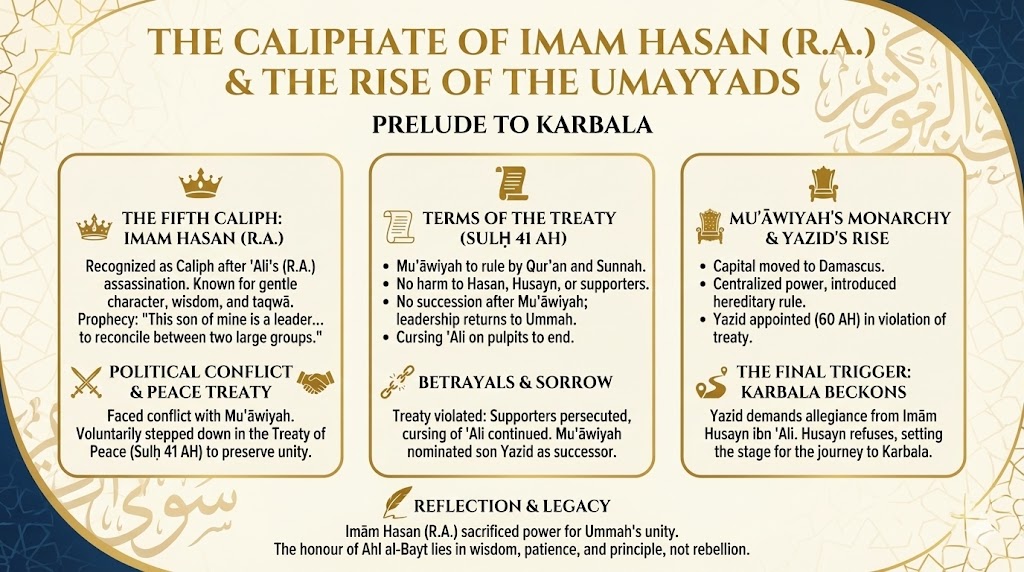
After ʿAlī (R.A.) was assassinated in 40 AH, the people of Iraq, Hijaz, and surrounding regions recognized Imām Ḥasan (R.A.) as Caliph. He was the elder grandson of the Prophet ﷺ, known for gentleness, wisdom, and taqwā.
“This son of mine is a leader, and perhaps Allah will use him to reconcile between two large groups of Muslims.” (Bukhārī)
2) Political Conflict with Muʿāwiyah
Muʿāwiyah (R.A.), governor of Syria, refused to acknowledge Ḥasan’s Caliphate, and a major confrontation seemed imminent. But Imām Ḥasan (R.A.) sought peace to prevent more bloodshed after Jamal and Ṣiffīn.
3) The Treaty of Peace (Sulḥ 41 AH)
Imām Ḥasan (R.A.) stepped down voluntarily with conditions, including:
- Muʿāwiyah will rule by Qur’an and Sunnah.
- No harm will come to Ḥasan, Ḥusayn, or their supporters.
- No succession after Muʿāwiyah—leadership returns to the Ummah to choose.
- Cursing ʿAlī on pulpits will end (sadly violated in many places).
4) Betrayals & Sorrow
- Supporters of Ḥasan were persecuted.
- Public cursing of Imām ʿAlī continued in various regions.
- Near Muʿāwiyah’s end, Yazīd was nominated—violating the treaty.
5) Martyrdom of Imām Ḥasan (R.A.) – 50 AH
Imām Ḥasan (R.A.) was poisoned and later buried in Jannat al-Baqīʿ. His burial near the Prophet ﷺ was denied by some aligned with the Umayyad camp.
6) From Khilāfah to Monarchy
Muʿāwiyah centralized power and shifted governance toward hereditary rule—an enormous turning point for political ideals in Islam.
7) Yazīd’s Appointment (60 AH): The Trigger
Governors were ordered to secure bayʿah for Yazīd. The Ahl al-Bayt and key regions rejected this. Yazīd’s demand for forced allegiance—especially from Imām Ḥusayn (A.S.)—became the final spark leading to Karbala.
Reflection
Ḥasan (R.A.) sacrificed political power to save Muslim lives. The tragedy is that peace was used as a ladder toward tyranny—until truth rose again through Ḥusayn (A.S.).