The Event
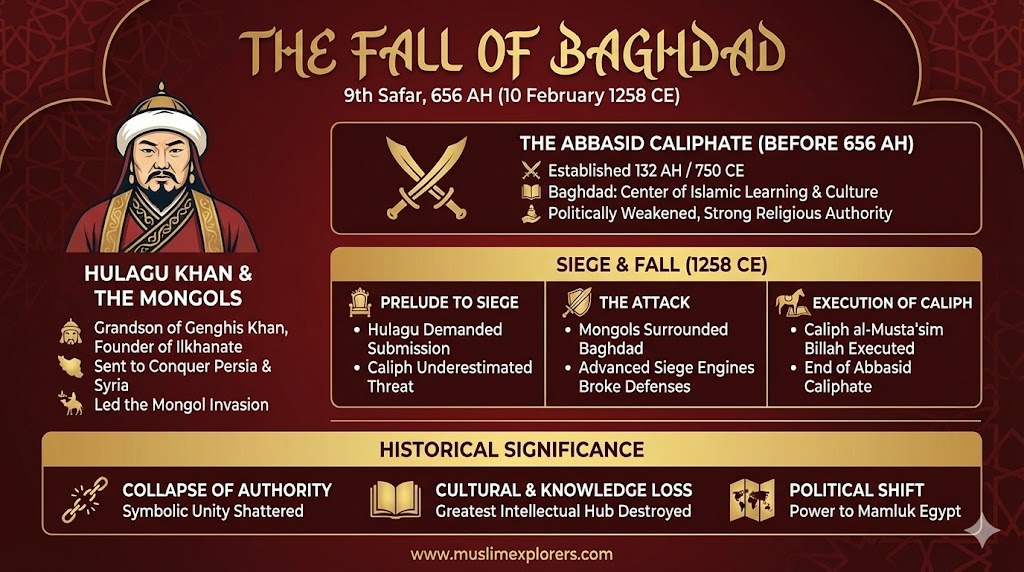
On 9th Ṣafar, 656 AH (10 February 1258 CE), Hulagu Khan, grandson of Genghis Khan, entered Baghdad. He killed the Abbasid Caliph al-Mustaʿṣim Billāh, ending the Abbasid Caliphate. Reports mention a massive massacre in Baghdad and surrounding areas; historical estimates vary widely.
Historical Background
Who Was Hulagu Khan?
- Grandson of Genghis Khan
- Brother of Möngke Khan and Kublai Khan
- Sent west to conquer Persia, Syria, and Islamic heartlands
- Founder of the Ilkhanate in Persia
The Abbasid Caliphate before 656 AH
- Established in 132 AH / 750 CE
- Baghdad was a center of learning, trade, culture
- By the 13th century, politically weakened but still held immense religious authority
Siege and Fall of Baghdad (1258 CE)
1) Prelude to the Siege
- Hulagu demanded submission from Caliph al-Mustaʿṣim Billāh.
- The Caliph underestimated the threat and failed to prepare militarily or diplomatically.
2) The Attack
- Mongols surrounded Baghdad in January 1258.
- Advanced siege engines and overwhelming numbers broke defenses within days.
3) Massacre
- For nearly a week, inhabitants were slaughtered indiscriminately.
- Death toll estimates vary: some medieval chroniclers reported millions; many modern historians suggest hundreds of thousands.
- Libraries including Bayt al-Ḥikmah (House of Wisdom) were destroyed and manuscripts lost.
4) Execution of the Caliph
- Caliph was executed — reportedly rolled in a carpet and trampled by horses to avoid shedding royal blood.
- This ended Abbasid rule in Baghdad after over 500 years.
Historical Significance
- Collapse of central authority: symbolic unity of Muslims was shattered.
- Cultural loss: Baghdad lost its status as the leading intellectual hub.
- Political shift: power moved toward Mamluk Egypt; Abbasids later installed symbolically in Cairo.
- Psychological trauma: remembered as one of the darkest events in Muslim history.