Part 1: The Time of the Prophet ﷺ
Unity & Brotherhood
Before Islam, Arab society was fragmented into warring tribes. Islam united them under Lā ilāha illā Allāh, forming an unprecedented brotherhood—especially between the Muhājirīn and Anṣār.
Conflicts with Quraysh
The Prophet ﷺ never initiated war. Battles such as Badr, Uḥud, and Khandaq were defensive—teaching Muslims firmness without abandoning justice or mercy.
The Treaty of Ḥudaybiyyah
Though it appeared humiliating, this treaty became a decisive victory, teaching patience, wisdom, and trust in Allah’s plan.
The Farewell Sermon
In his final message, the Prophet ﷺ emphasized unity, equality, and justice, warning:
“Do not turn back into disbelievers, striking the necks of one another after me.”
Part 2: After the Prophet ﷺ — The Rightly Guided Caliphs
Abū Bakr (R.A.)
When tribes refused zakāh after the Prophet’s ﷺ death, Abū Bakr (R.A.) fought the Apostasy Wars to preserve unity and prevent rebellion.
ʿUmar (R.A.)
A golden era of justice, expansion, and welfare. Strong leadership maintained internal peace and stability.
ʿUthmān (R.A.)
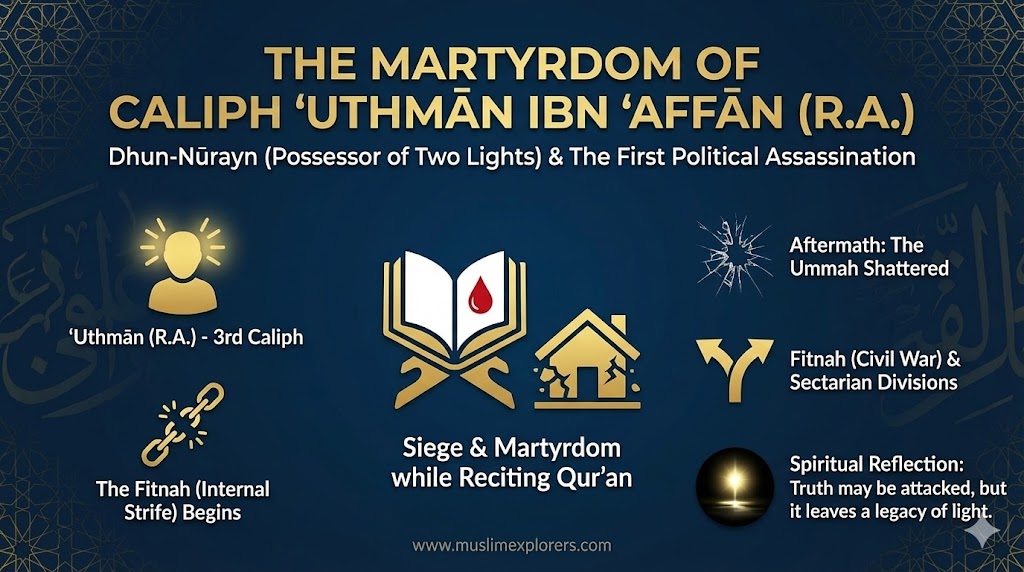
Growing greed and rebellion led to false accusations. His assassination in Madinah marked the beginning of major fitnah.
ʿAlī (R.A.)
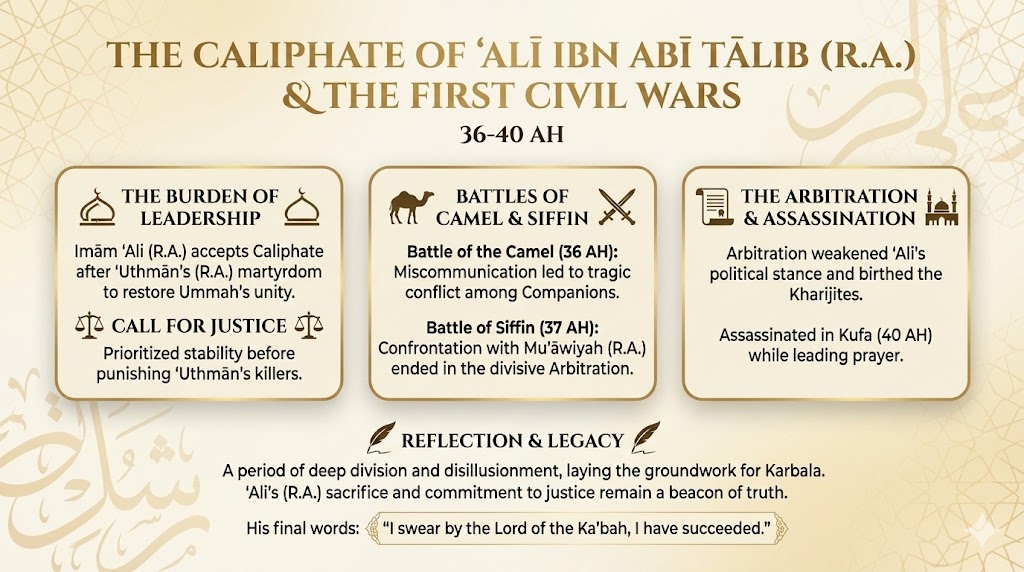
Faced two major civil wars—Jamal and Ṣiffīn—rooted in misunderstanding and unresolved justice for ʿUthmān. The Khārijites emerged, declaring other Muslims disbelievers.
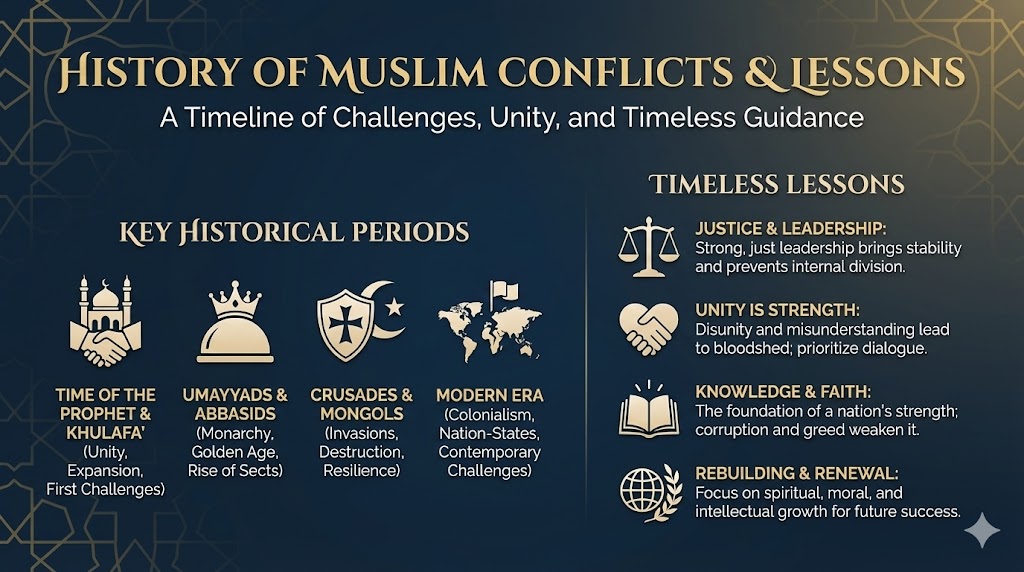
Lesson: Disunity and misunderstanding lead to bloodshed. Justice and dialogue must always come first.
Part 3: Umayyads, Abbasids & Beyond
The Umayyads
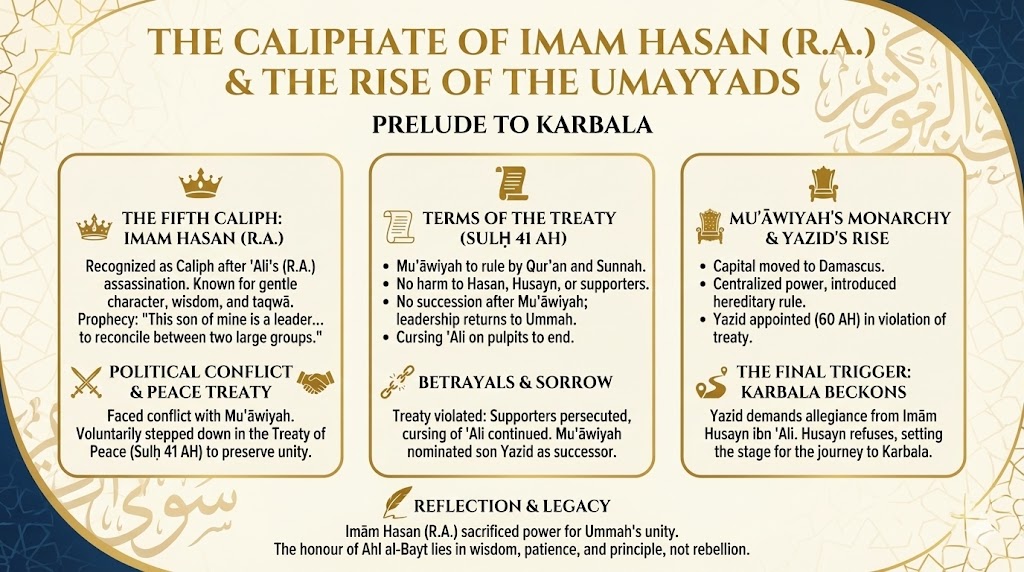
Leadership shifted toward monarchy, sidelining shūrā. Yet Islam spread widely across Spain, North Africa, and Central Asia.
The Abbasids
A golden age of knowledge, science, and culture. Over time, political rivalries, luxury, and neglect of Islamic principles weakened them.
Rise of Sects
Political and spiritual divisions deepened, leading to long-lasting fractures within the Ummah.
Lesson: Knowledge and justice strengthen a nation; injustice and greed destroy it.
Part 4: Crusades & Mongols
The Crusades
European armies massacred Muslims in Jerusalem (1099). Ṣalāḥuddīn later unified Muslims and liberated Jerusalem with mercy in 1187.
The Mongols
Baghdad was destroyed in 1258, killing hundreds of thousands. Yet many Mongols later embraced Islam.
Lesson: Even the greatest losses can turn into victories when we return to Allah and unite.
Part 5: The Ottoman Era
Strength
The last great Caliphate unified Muslims for centuries and protected Makkah and Jerusalem.
Decline
Corruption, arrogance, and foreign influence weakened the empire until it was called “the sick man of Europe.”
Lesson: Power is from Allah. When we turn away from Him, we fall.
Part 6: Fall of the Caliphate & Modern Times
In 1924, the Caliphate was abolished, dividing the Ummah into artificial nation-states. The occupation of Palestine and repeated wars followed—fought without unity.
Lesson: Division and nationalism destroy us. Unity upon Islam is the solution.
Part 7: Contemporary Challenges
- Civil wars and foreign interventions
- Extremism harming Muslims themselves
- Islamophobia fueled by media and politics
- Decline in education, science, and economy
Final Lesson: We must rebuild ourselves spiritually, morally, intellectually, and economically.
Overall Lessons (Especially for Youth)
- Islam unites — tribalism and nationalism divide.
- Injustice, oppression, and arrogance bring downfall.
- Leaders must be just and humble.
- Knowledge and faith are the foundation of strength.
- Allah grants victory only when we deserve it.