The Event
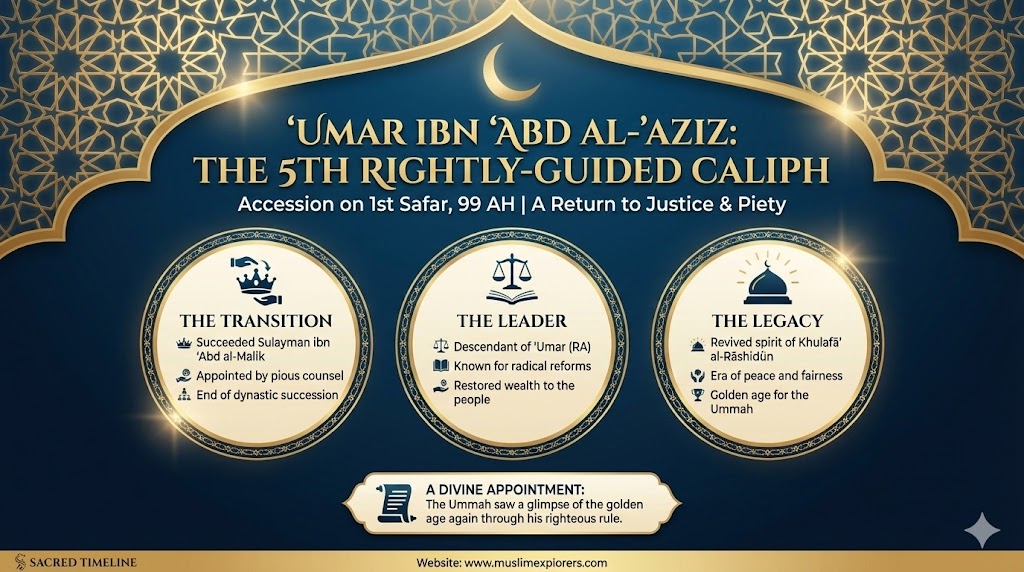
On 1st Ṣafar, 99 AH, the Umayyad Caliph Sulaymān ibn ‘Abd al-Malik passed away, and his brother-in-law Ḥaḍrat ‘Umar ibn ‘Abd al-‘Azīz assumed the caliphate.
Who Was Sulaymān ibn ‘Abd al-Malik?
- 7th Umayyad Caliph, son of ‘Abd al-Malik ibn Marwān.
- Reigned from 96–99 AH (714–717 CE).
- Known for expansionist campaigns and interest in conquering Constantinople.
- Ruled from Damascus.
Key Events During His Rule
- Military Campaigns: Major but unsuccessful siege of Constantinople; continued Byzantine expansion attempts.
- Political Structure: Continued strong administration inherited from al-Walīd I.
- Succession Plan: Bypassed his sons and appointed ‘Umar ibn ‘Abd al-‘Azīz under counsel of pious advisors.
Who Was ‘Umar ibn ‘Abd al-‘Azīz (R.A.)?
- Descendant of Sayyidunā ‘Umar ibn al-Khaṭṭāb (R.A.) from his mother’s side.
- Married to Sulaymān’s sister (brother-in-law).
- Appointed on 1 Ṣafar 99 AH.
- Known as the “Fifth Rightly-Guided Caliph” for piety, reforms, justice.
Why This Transition Was Transformational
From Royalty to Righteousness
- Marked the end of typical dynastic rule patterns.
- Succession based on taqwā, knowledge, and justice—not mere bloodline.
A Reformist Era
- Removed oppressive governors.
- Restored wealth and land to the people.
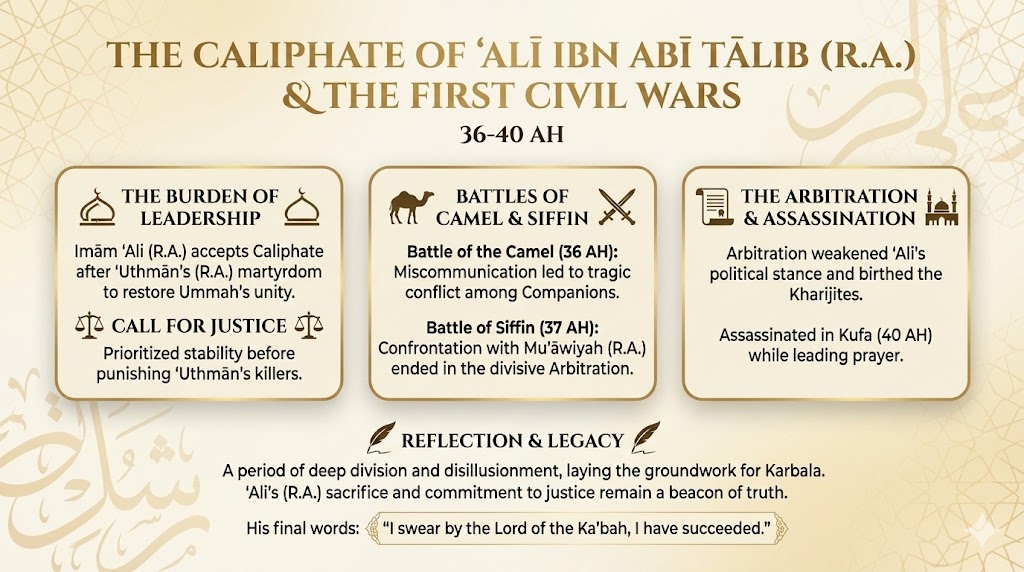
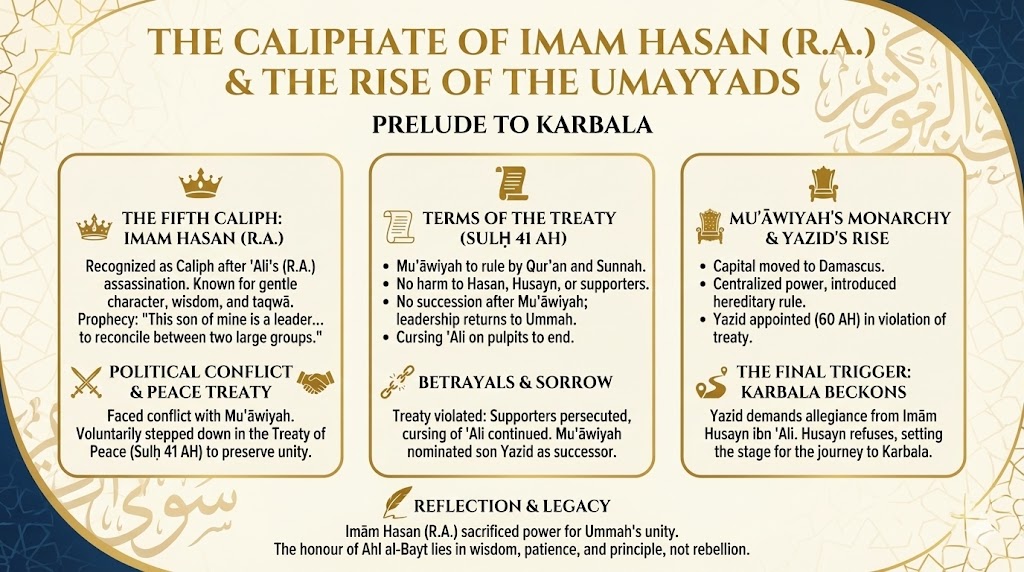
- Halted cursing of Sayyidunā ‘Alī (R.A.) from pulpits.
- Expanded and institutionalized Dār al-‘Ilm (House of Knowledge).
- Revived the spirit of Khulafā’ al-Rāshidūn.
Justice and Piety
- Lived simply, refused luxuries.
- Returned Umayyad wealth to Bayt al-Māl.
- Non-Muslims and oppressed welcomed his fairness.
Death of Sulaymān
- Died in a palace in Dābiq (Syria) on 1 Ṣafar 99 AH.
- Buried nearby.
- Left behind a succession that reshaped Islamic history.
Spiritual Reflection
Allah chooses leaders as a mercy or a test. In ‘Umar ibn ‘Abd al-‘Azīz, the Ummah witnessed a glimpse of the golden age again.