The Event
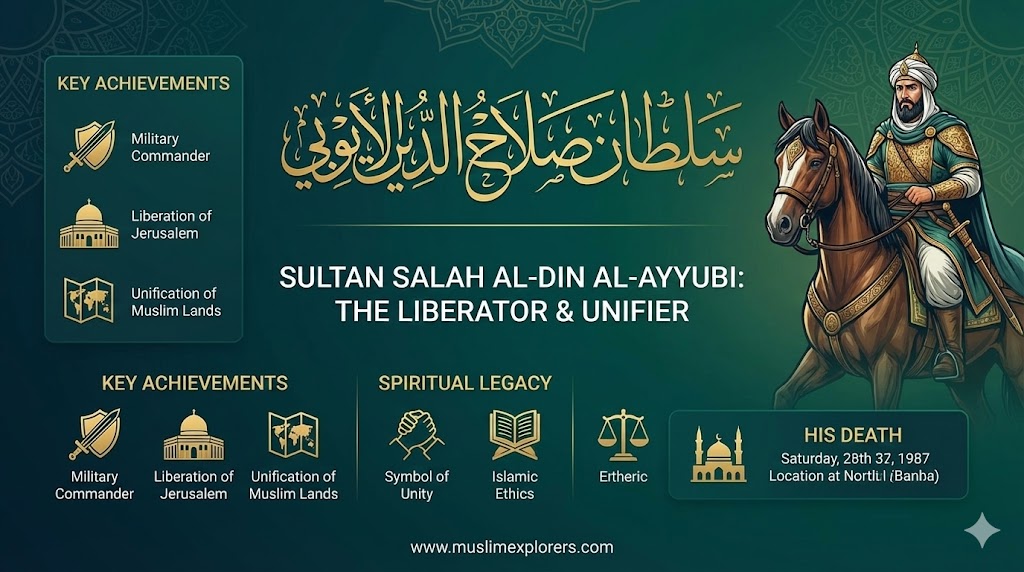
On 1st Ṣafar, 589 AH (4 March 1193 CE), Sultan Ṣalāḥ al-Dīn al-Ayyūbī passed away in Damascus.
Who Was Ṣalāḥ al-Dīn?
- Full name: al-Malik al-Nāṣir Ṣalāḥ al-Dīn Yūsuf ibn Ayyūb.
- Born: 532 AH / 1137 CE in Tikrit (modern-day Iraq).
- Founder of Ayyūbid dynasty; Sultan over Egypt, Syria, Yemen, parts of the Hejaz.
- Renowned as liberator of Jerusalem from Crusader control.
- Remembered for chivalry, justice, humility, and uniting Muslims.
Key Achievements
1) Rise to Power
- Began under his uncle Shirkuh in service of Zengids.
- Became vizier of Egypt under Fatimid Caliphate (1169 CE).
- Abolished Fatimid Caliphate in 1171 CE and restored Sunni rule in Egypt.
2) Unification of Muslim Lands
- Consolidated Egypt and Syria.
- Extended authority to Yemen, the Hejaz, and parts of North Africa.
3) Battle of Ḥaṭṭīn (583 AH / 1187 CE)
- Decisive victory over Crusaders.
- Destroyed Crusader military strength in the Levant.
4) Liberation of Jerusalem
- On 27 Rajab 583 AH, Jerusalem was recaptured peacefully—coinciding with al-Isrā’ wal-Mi‘rāj anniversary.
- Allowed Christian residents to leave safely—unlike Crusader massacres of 1099.
5) After Jerusalem
- Resisted the Third Crusade (Richard the Lionheart).
- Signed a truce: Muslims kept Jerusalem; Christian pilgrimages allowed.
His Death
- Date: 1 Ṣafar 589 AH / 4 March 1193 CE
- Place: Damascus
- Cause: likely illness (possibly fever)
- Burial: beside the Umayyad Mosque
- Remarkable fact: died almost penniless—spent wealth on jihād, charity, welfare of the poor
Spiritual and Historical Significance
- Symbol of unity: united Muslims across regions, sects, ethnicities.
- Ethics in war: remembered even by enemies for mercy and justice.
- Role model: leadership for Ummah above personal gain.