Hajj: A Journey of the Soul
Hajj is not merely a ritual pilgrimage—it is a spiritual hijrah from the world to Allah, walking the path of Prophets, reviving tawḥīd, and surrendering the ego.
“Proclaim Hajj to mankind…” (22:27)
A Sacred Legacy Through the Prophets
1) Adam (A.S.) — The First Pilgrim
- Adam reunited with Hawwā at Arafāt.
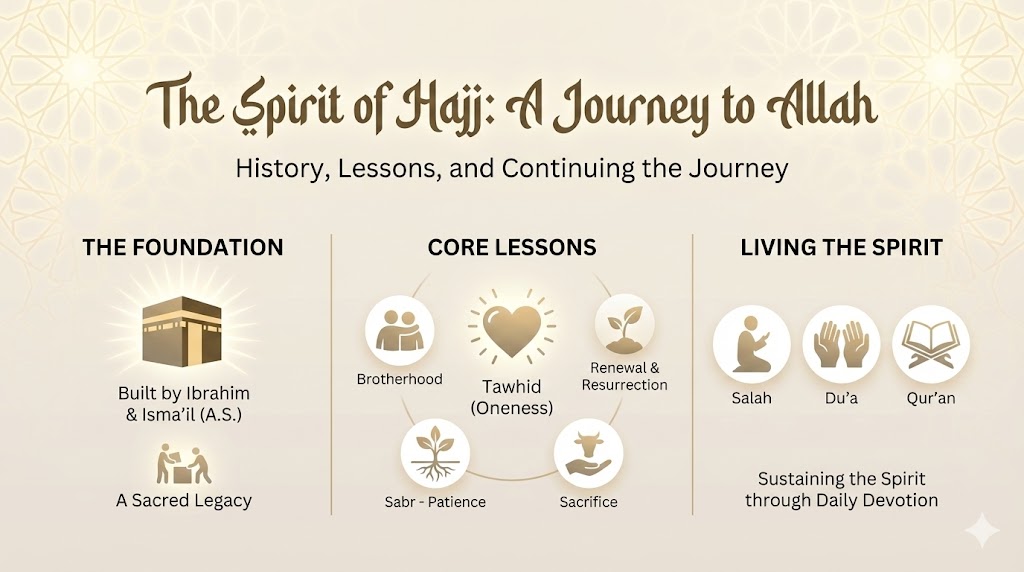
- He built the first House of worship (Ka‘bah).
“Indeed, the first House established for mankind was that at Bakkah…” (3:96)
2) Ibrahim (A.S.) — The Architect of Tawḥīd
- Rebuilt the Ka‘bah with Ismā‘īl (A.S.).
- Called mankind to Hajj.
- Hājar’s search and the sacrifice are preserved in the rites.
3) Prophet Muhammad ﷺ — The Final Pilgrim
- Performed one Hajj: Hajj al-Wadā‘.
- His sermon emphasized justice, unity, and rights.
“Today I have perfected your religion for you…” (5:3)
Major Lessons from Hajj
1) Tawḥīd
Every rite revolves around submission to Allah alone—no idols, no shrines—only the symbol of unity.
2) Equality & Brotherhood
In ihrām, everyone looks the same—titles, race, and wealth dissolve into servitude to Allah.
3) Patience & Discipline
Heat, crowds, long walks—these refine humility and endurance.
4) Death & Resurrection
- Ihrām resembles the shroud.
- Arafāt resembles standing on Judgment Day.
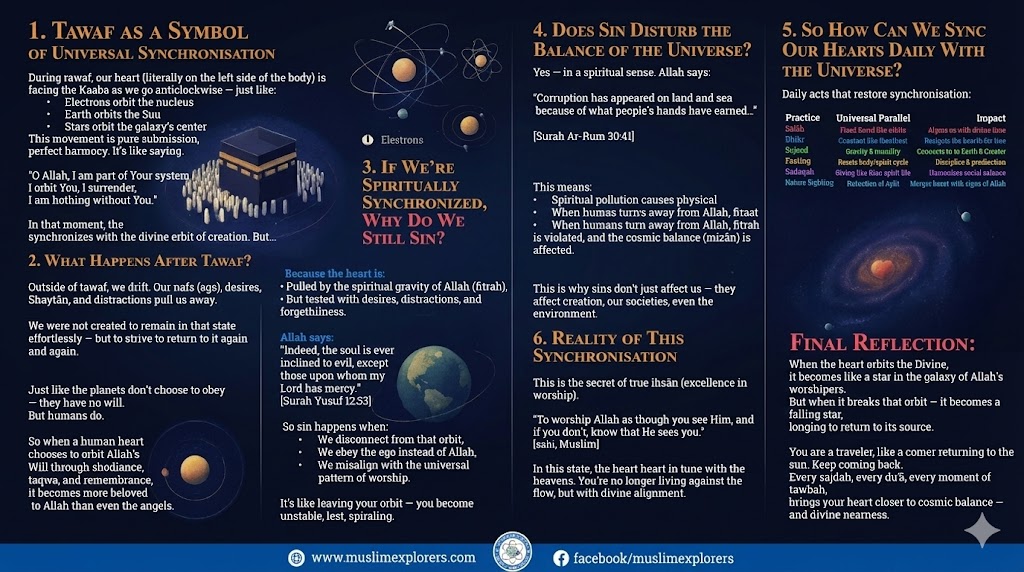
- Tawāf reflects the orbit of angels around the Throne.
5) Sacrifice
Qurbānī commemorates Ibrahim’s surrender and symbolizes slaughtering ego and pride.
How to Maintain the Spirit After Hajj
- Preserve tawḥīd and purify intention
- Continue Qur’an, dhikr, du‘ā, and salah with presence
- Stay humble—avoid “I did Hajj” pride
- Serve the Ummah and support those in need
- Write a personal post-Hajj pledge
Final Reflection
“Hajj is Arafah…”
Hajj is a return—not only to Makkah, but to your fitrah (original purity).