The Connection Between Body and Heart
The Prophet ﷺ taught us that the heart is the center of our being. When it is sound, the entire body follows in righteousness. But this relationship works both ways—our physical actions directly impact the spiritual state of our heart.
Understanding how each limb affects our qalb is essential for anyone seeking spiritual growth and closeness to Allah.
How Do Limbs Harden the Heart?
Sin enters through the gates of our senses and limbs, each leaving its mark:
Eyes: Constantly looking at ḥarām—indecent images, wealth with envy, or worldly temptations—fills the heart with lust, jealousy, and heedlessness of Allah.
Ears: Listening to gossip, lies, or music that stirs base desires leads to arrogance and spiritual disease.
Tongue: Backbiting, slandering, lying, and arguing kill humility and sincerity, replacing them with hardness and pride.
Hands: When used for oppression, theft, or touching what is unlawful, darkness covers the heart like a veil.
Feet: Taking steps toward sin or heedless gatherings distances you from Allah's remembrance.
Stomach and Private Parts: The Prophet ﷺ warned that if these two are protected, the rest will follow. Guarding them is the foundation of spiritual purity.
The Spiritual Impact of Sin
A profound hadith from Tirmidhi teaches us: "When the servant commits a sin, a black dot appears on his heart." Each sin darkens the heart further, and constant sin without repentance leads to what scholars call a spiritual blackout of the qalb—a state of hardness and heedlessness.
This is why we may feel distant from Allah, struggle with prayers, or find no sweetness in worship. The accumulated stains on our hearts block the light of faith.
Reversing the Damage: How Limbs Revive the Heart
The same limbs that can harden the heart can also revive it. By redirecting each toward obedience, the heart begins to bloom with light (nūr), humility, and consciousness of Allah.
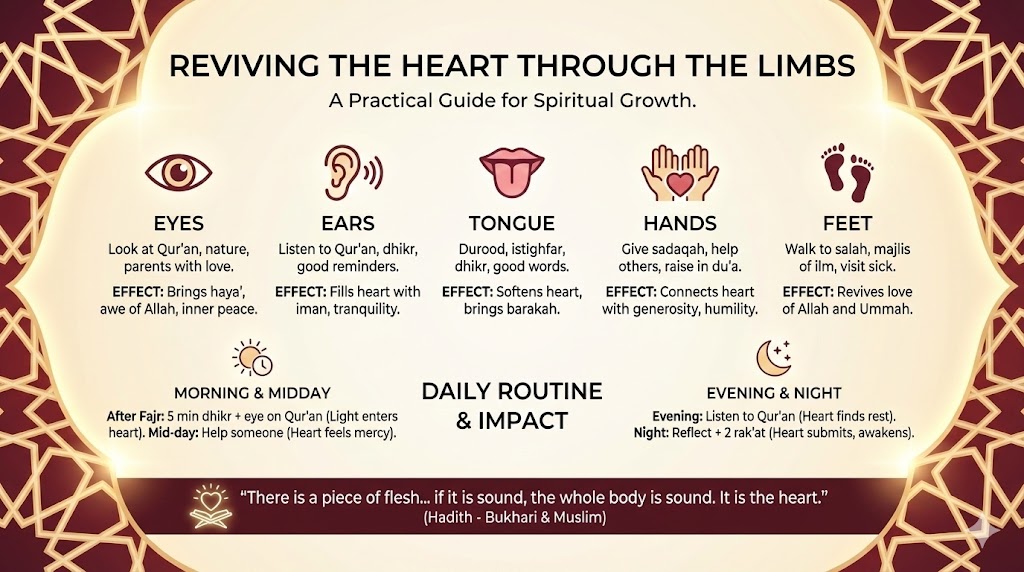
Eyes: Lower your gaze, look at the Quran, appreciate nature as Allah's creation, and gaze at your parents with love. This brings ḥayāʾ (modesty), awe of Allah, and inner peace.
Ears: Listen to Qur'an recitation, dhikr, and beneficial reminders. This fills the heart with īmān and tranquility.
Tongue: Engage in durood upon the Prophet ﷺ, istighfār (seeking forgiveness), dhikr, and kind words. This softens the heart and brings barakah.
Hands: Give sadaqah, help others in need, and raise them in duʿāʾ. This connects the heart with generosity and humility.
Feet: Walk to ṣalāh, attend circles of knowledge, visit the sick. This revives love of Allah and compassion for the Ummah.
Stomach: Eat only ḥalāl, eat moderately, and fast often. This tames the nafs and cleanses the spiritual system.
Private Parts: Guard chastity and modesty. This builds taqwā and sincerity in all actions.
Daily Revival: A Practical Routine
Spiritual transformation requires daily commitment. Here's a simple framework to revive your heart through your limbs:
After Fajr: Spend 5 minutes in dhikr with your tongue while your eyes read from the Qur'an. Light enters the heart at dawn.
Mid-day: Use your hands and feet to help someone—give charity or show kindness. The heart feels Allah's mercy through service.
Evening: Protect your ears from gossip and excessive news. Instead, listen to Qur'an. The heart finds rest in Allah's words.
Night: Reflect on your day and pray two rakʿāt before sleep. All limbs submit together, and the heart awakens to its Lord.
A Window for Light
Remember this powerful reflection: Every sin you commit with a limb carves a crack into your heart. Every act of obedience with that same limb builds a window for light to enter.
The choice is yours, moment by moment, action by action. Will your limbs be tools of your heart's destruction or the means of its return to Allah?
Let your body become what it was meant to be—a vehicle for your soul's journey home.