The Best Days of the Year in Islam
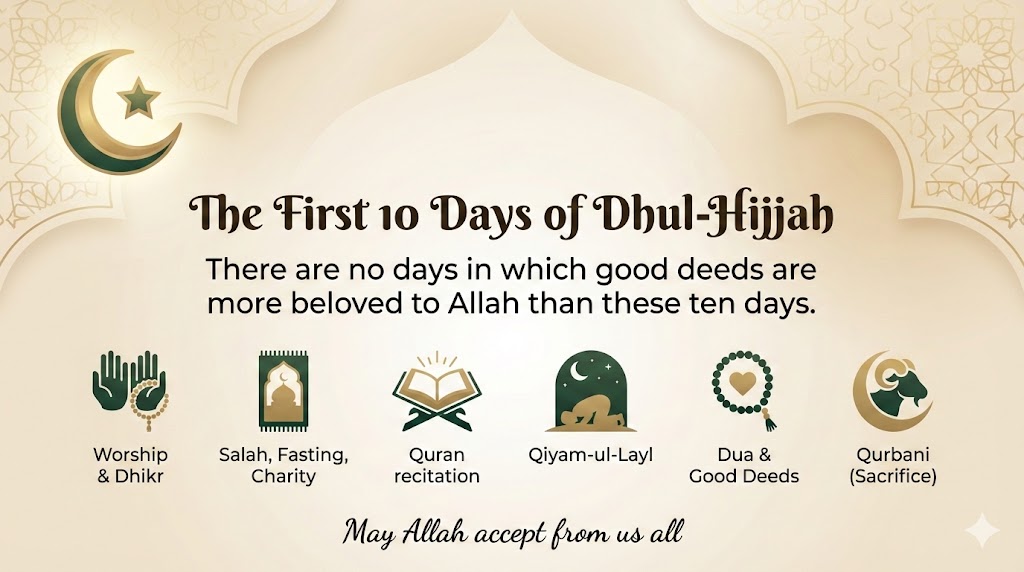
The first ten days of Dhul-Hijjah are considered the most virtuous days of the year due to their spiritual weight, the unique opportunities for worship, and their connection to the greatest pillars of Islam.
1) Allah Swears by These Days
Allah highlights their greatness in Surah Al-Fajr:
“By the dawn. And by the ten nights.” (89:1–2)
Many Qur’anic commentators explain these “ten nights” as the first ten days of Dhul-Hijjah—showing how sacred they are.
2) All Major Acts of Worship Come Together
These days are a rare season where the core acts of Islam can gather in one time:
- Faith renewed through dhikr and devotion
- Prayer maintained and increased
- Fasting (especially on the Day of Arafah)
- Charity and supporting those in need
- Hajj performed during these days
3) The Most Beloved Days for Good Deeds
The Prophet ﷺ said:
“There are no days in which righteous deeds are more beloved to Allah than these ten days.”
(Bukhari 969)
Every good deed—prayer, Qur’an, charity, service, dhikr—carries greater reward in these days than any other time of the year.
4) The Day of Arafah (9th) — A Peak of Mercy
For those not performing Hajj, fasting the Day of Arafah is a gift of Allah’s mercy:
Fasting it expiates the sins of the past year and the coming year. (Muslim 1162)
5) Qurbani (10th) — The Legacy of Ibrahim (A.S.)
Eid al-Adha commemorates Ibrahim’s (A.S.) willingness to sacrifice for Allah—teaching us that true Islam is surrender.
6) Increase Dhikr and Takbeer
From these days, fill your tongue with takbeer, tahmeed, tasbeeh, and tahlil—especially the takbeerat:
“Allāhu Akbar, Allāhu Akbar, Lā ilāha illAllāh, wa Allāhu Akbar, Allāhu Akbar wa lillāhil-ḥamd.”
7) Revive the Heart and Reconnect with the Ummah
These days invite reflection on the lessons of Hajj, renewed du‘ā says, and unity in worship with Muslims across the world.