The Most Powerful Day of the Year
The Day of Arafah, the 9th of Dhul-Hijjah, is the most powerful day of the entire Islamic calendar. Even for those not standing on the plains of Arafah, this day represents an unmatched opportunity to draw near to Allah.
What Makes This Day So Special?
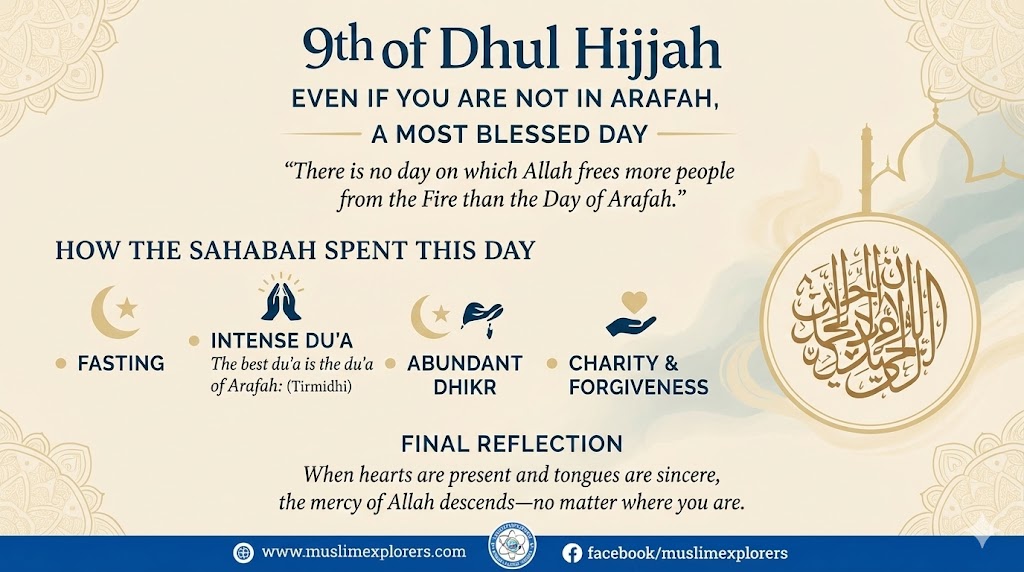
The Prophet (peace and blessings be upon him) declared: "There is no day on which Allah frees more people from the Hellfire than the Day of Arafah." (Sahih Muslim)
The Power of Fasting on Arafah
About fasting on this day for those not in Hajj, the Prophet said: "It expiates the sins of the previous year and the coming year." (Sahih Muslim). This is an extraordinary mercy—two years of sins forgiven through one day of sincere fasting.
How the Sahabah Spent Arafah
Even those not performing Hajj did not take this sacred day lightly. Here's how the Companions and early generations honored it:
Fasting with Devotion
Imam Nawawi (may Allah have mercy on him) noted: "The scholars unanimously agreed that fasting on the Day of Arafah is among the most recommended fasts of the year."
Abdullah ibn Umar and Abu Qatadah (may Allah be pleased with them) would fast this day whenever they weren't performing Hajj, treating it as a precious opportunity for spiritual cleansing.
Intense Dua Throughout the Day
The Prophet (peace and blessings be upon him) taught: "The best dua is the dua of Arafah." (Tirmidhi)
Even for those not physically in Hajj, the spiritual gate of mercy swings wide open on this day. Umar ibn Abd al-Aziz (may Allah have mercy on him), when not on Hajj, would sit alone from Dhuhr prayer until Maghrib, constantly making heartfelt dua.
Abundant Dhikr: The Practice of the Salaf
The early generations increased their remembrance of Allah through:
Tahlil—declaring "La ilaha illa Allah" (There is no god but Allah), Takbir—proclaiming "Allahu Akbar" (Allah is the Greatest), Tahmid—saying "Alhamdulillah" (All praise belongs to Allah), and Tasbih—repeating "SubhanAllah" (Glory be to Allah).
Ali ibn Abi Talib (may Allah be pleased with him) would raise his voice in dhikr so that others around him would be reminded to remember Allah.
Charity and Forgiveness
The Companions treated this day like Laylat al-Qadr—giving charity generously, reconciling with family members, seeking forgiveness from those they wronged, and repenting deeply to Allah.
The Urgency of Hasan al-Basri
Hasan al-Basri (may Allah be pleased with him) would say with urgency: "Whoever is not forgiven on the Day of Arafah, when will he be forgiven?" This question should shake every Muslim's heart with the weight of this opportunity.
The Practice of Later Generations
The Tabi'in (students of the Companions) and Taba Tabi'in (their students) also deeply honored the Day of Arafah:
Said ibn Jubayr's Preparation
Said ibn Jubayr (may Allah be pleased with him) would prepare his dua list days in advance, then spend most of the 9th carefully reciting it, ensuring no blessing was left unasked for.
Sufyan al-Thawri's Tears
Sufyan al-Thawri (may Allah have mercy on him) would declare: "I would not trade this day for anything," and would weep profusely, fearing he wouldn't be among those forgiven.
Imam Ahmad's Counsel
Imam Ahmad ibn Hanbal (may Allah have mercy on him) used to fast and advise others: "Seize this day, for sins fall from the soul like leaves from a tree in autumn wind."
What You Can Do
Even if you're not physically in Hajj, here's how to maximize this blessed day:
Fast from dawn to sunset with sincere intention. Make heartfelt dua throughout the day, especially just before Maghrib when acceptance is most likely. Repeat the best dua of Arafah: "La ilaha illa Allahu wahdahu la sharika lah, lahul-mulku wa lahul-hamdu, wa huwa ala kulli shay'in qadeer" (There is no god but Allah alone, with no partner. To Him belongs dominion and praise, and He is capable of all things).
Make abundant dhikr all day long. Forgive others and earnestly seek Allah's forgiveness for yourself. Give charity, even if just a small amount, for its reward is multiplied on this day.
Final Reflection: Be There Spiritually
Even if you're not in Arafah physically, you can be there spiritually. When hearts are fully present and tongues are completely sincere, the mercy of Allah descends regardless of geographic location.
May this 9th of Dhul-Hijjah be your day of complete forgiveness, spiritual renewal, and drawing near to your Lord. Ameen.