The Sacred Connection of ʿĀshūrā
The 10th of Muharram is not only marked by the tragedy of Karbala, but also by one of the greatest moments of divine deliverance in history—the salvation of Mūsā (A.S.) and Banī Isrā’īl from Pharaoh.
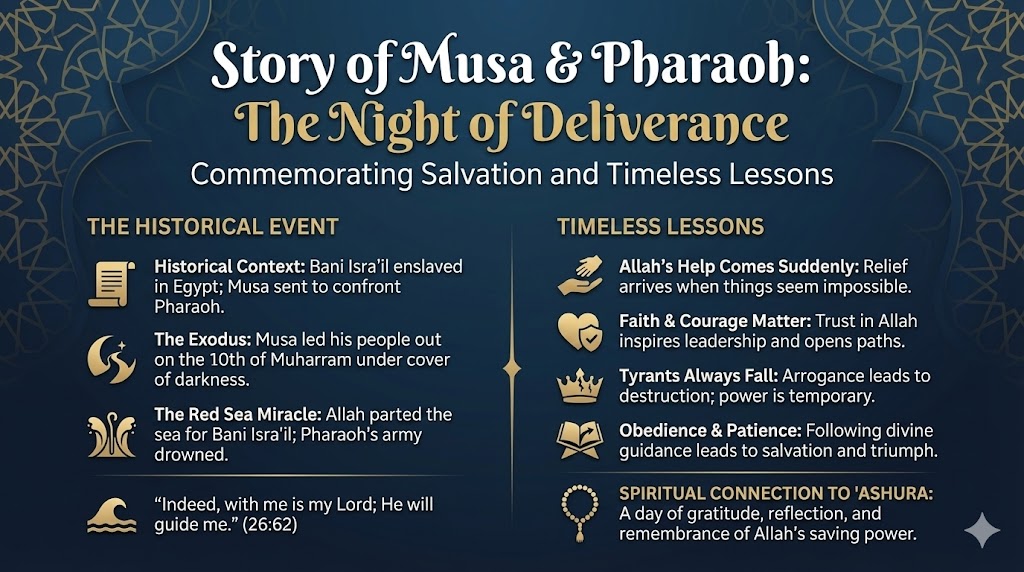
Historical Context: Oppression in Egypt
For generations, Banī Isrā’īl lived under brutal enslavement. Pharaoh declared himself a god and ruled through fear, torture, and mass infanticide. When Mūsā (A.S.) called him to worship Allah and release the people, Pharaoh mocked and resisted.
The Signs and the Final Command
Allah sent repeated signs—plagues, locusts, frogs, and blood—yet Pharaoh repeatedly broke his promises. Finally, Allah revealed:
“Leave with My servants at night, for you will surely be pursued.” (Surah ad-Dukhān 44:23)
The Night of the Exodus
On the night of the 10th of Muharram, Mūsā (A.S.) led his people out of Egypt. By dawn, Pharaoh pursued them with his army.
“And so they pursued them at sunrise.” (Surah ash-Shuʿarā’ 26:60)
The Red Sea Miracle
Trapped between the sea and the army, the people panicked. Mūsā (A.S.) responded with unwavering yaqīn:
“No! Indeed, with me is my Lord; He will guide me.” (26:62)
The sea split, creating dry paths. Banī Isrā’īl crossed safely, while Pharaoh and his army drowned.
“Then We drowned the others.” (26:66)
Lessons from the Night of Deliverance
- Allah’s help comes suddenly — relief arrives when hope seems lost.
- Tyrants always fall — arrogance leads to destruction.
- Faith over fear — yaqīn opens paths where none seem possible.
- Obedience brings freedom — salvation follows divine guidance.
Spiritual Connection to ʿĀshūrā
When the Prophet ﷺ learned that the Jews fasted on ʿĀshūrā to commemorate this victory, he said:
“We are closer to Mūsā than they are.” (Bukhārī & Muslim)
He fasted and encouraged the Ummah to fast on this day as gratitude to Allah.
Reflection
From Mūsā to Ḥusayn, Allah teaches us one timeless truth: oppression never wins, and standing with truth—no matter how impossible it looks—leads to eternal success.